

How To Wash Filter Cake
Block washing normally is used to flush out impurities from a formed block that contains soluble impurities.1 The voids of the filter cake are unremarkably filled by the purer liquid during the block washing process. Many examples of industrial cake washing applications are proficient, but the key ones are more often than not for pigments and dyestuffs, agricultural chemicals, pharmaceuticals, beverage processing, etc.
Generally, washing is done to remove impurities from a valuable solid product1, but information technology can too be used to flush out a valuable liquid product from a waste solid product. Block washing has been practiced in a multifariousness of devices from vacuum drums and chugalug filters2, to handbasket centrifuges and candle filtersthree, to rotary pressure filters4, to automatic pressure level filters5, and to filter presses (including all three types: plate and frame, recessed sleeping accommodation, and membrane recessed chamber6-viii). Significant work has been done on modeling1, besides as on the non-ideal aspects of the cake washing process9. Even laboratory devices take been developed to simulate the cake washing process.viii
The preferred way to describe the washing process is past use of the and then-called washing curve or plot, where the normalized impurity concentration in the block is related to the Launder Ratio (or the number of launder displacements, N) every bit defined by the volume of wash liquid used divided by the book of liquid in the block at the start of the washing process.i Unfortunately, many investigators simply plot the solute concentration versus washing time which can be misleading. Every bit discussed in Ref. 1, it is very important to measure the impurity concentration in the block along with the exiting impurity concentration in the wash liquid. The reason is that the porous solid particles form a non-platonic block, which can lead to cake non-uniformities that may not exist detected by impurity measurements in the wash. In add-on, an impurity mass balance must exist washed around the washing process. Nevertheless, there are 4 ways to correspond this wash curve1, just all iv are related to the Wash Ratio. Perchance the almost of import of these is the percentage of impurity remaining in the cake plotted against the Wash Ratio, considering only then tin can non-ideal washing exist ascertained as postulated in Ref. 1.
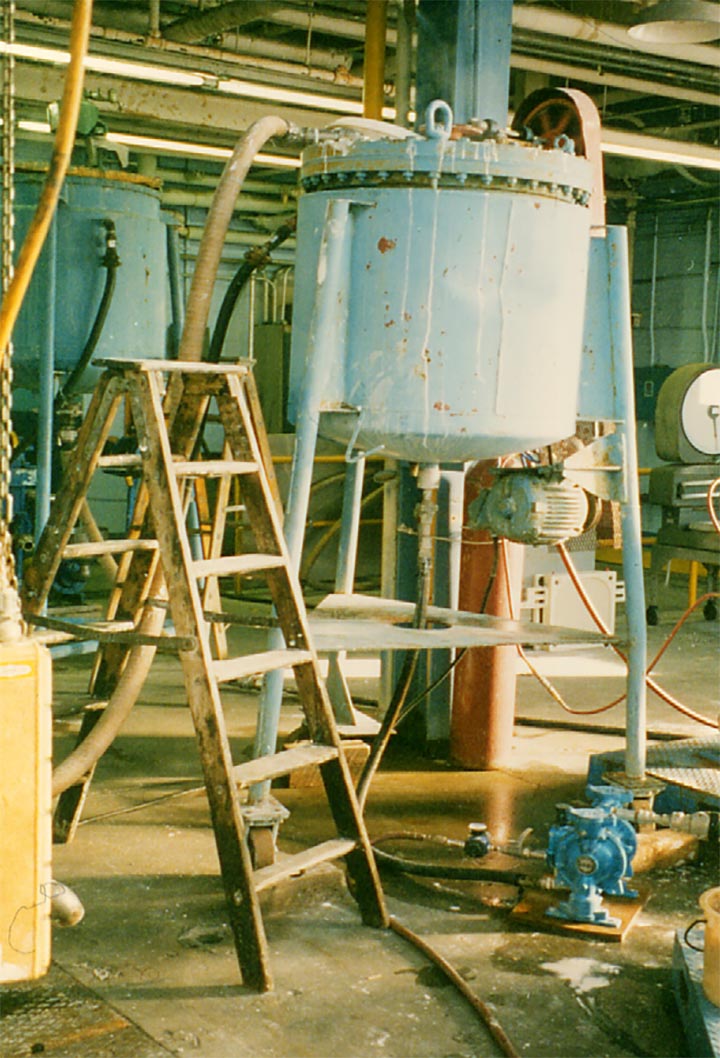
As discussed above, in that location are many SLS devices where cake washing can be accomplished, but the membrane recessed chamber filter press is amongst the most efficient6-eight in terms of both impurity removal and wash consumption. As discussed in Ref. 1, there are basically iii wash regions: (i) direct displacement of mother liquor; (2) mass transfer diffusion; and (three) an intermediate region where some cake pores undergo displacement while others undergo mass transfer diffusion. It is precisely in these intermediate and diffusion regions where the membrane filter press is appropriate because long wash times can be tolerated, block consolidation tin be accomplished to avert block shrinkage and launder bypassing (or short-circuiting), and large tonnages tin be produced. Of form, this situation is usually confined to the washing of fine particles.
Some other key bespeak in cake washing is the not-platonic upshot associated with non-uniform wash distribution near the filter cloth surface.nine This maldistribution is caused by the cloth support used for mechanical integrity, which vary significantly from device-to-device likewise every bit within the same membrane filter printing category, for example. Many different types of membrane filter plates tin be used, and all of these affect this non-compatible wash distribution differently. This paper will discuss membrane filter press cake washing and how some plate designs can affect washing results.
Preliminary washing data
Before any wash report is conducted, all preliminary calibrations must be done to clinch reliable wash plots.viii For case, Effigy 1 presents the % Dissolved Salts plot versus conductivity for the titanium dioxide (Ti02) block washing studied hither. Note that three meters were used here (2 Myron L and ane Beckman conductivity bridge) to avoid musical instrument errors; and all meters were calibrated weekly with purchased calibration standards.
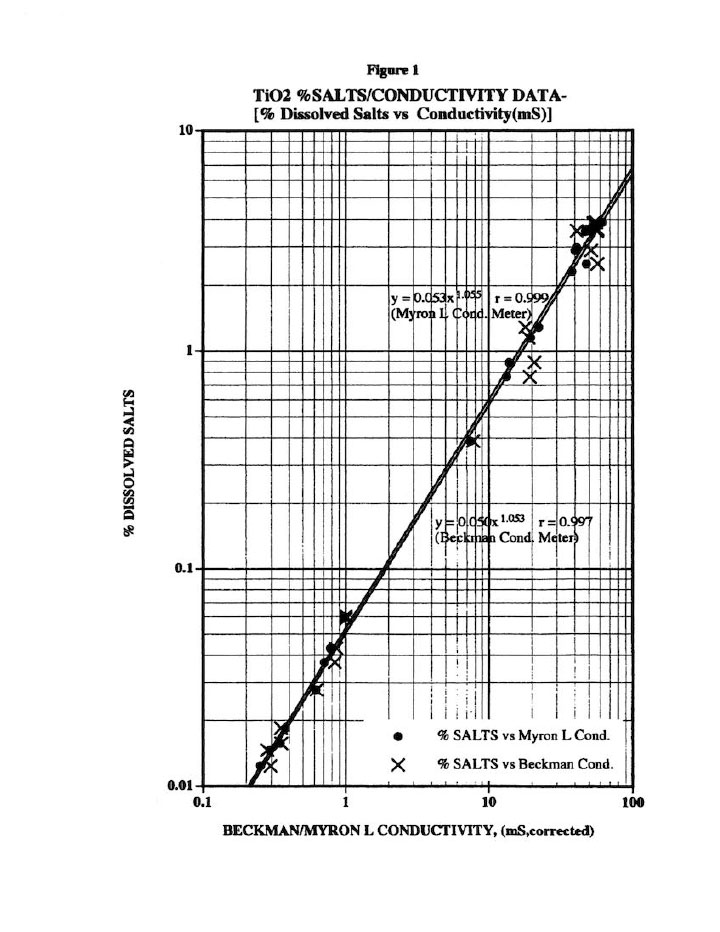
Figure ii presents the typical Total Suspended Solids (TSS) versus Turbidity plot used to correct for the solids that escape from the membrane press into the various go out streams.
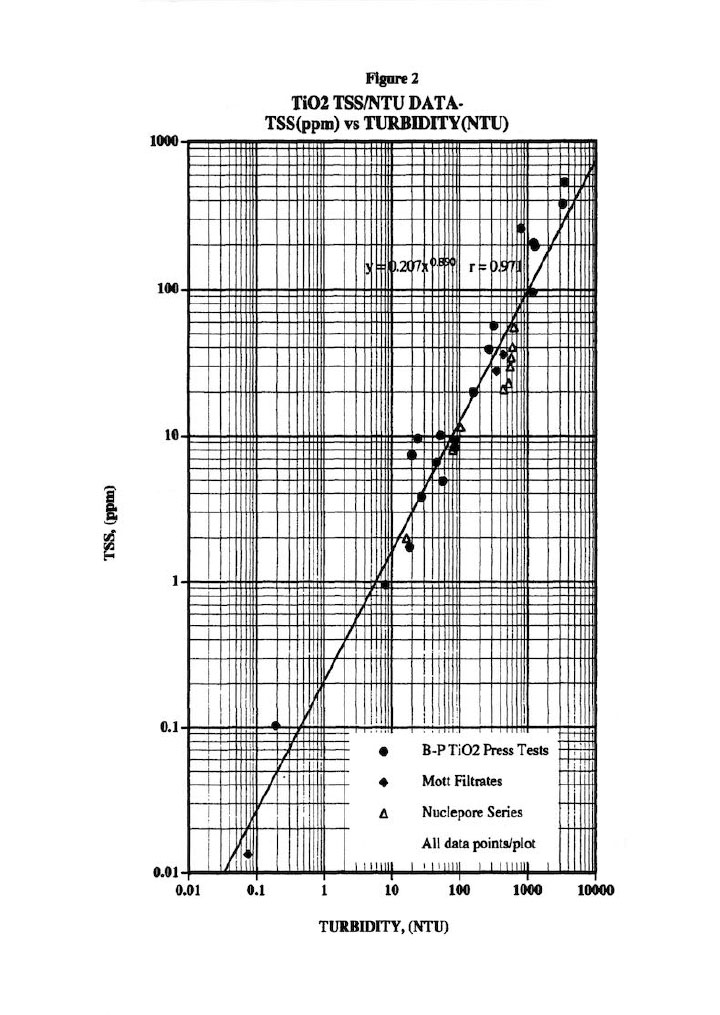
Figure 3 presents a typical cake solids leaching plot used to assess the amount of salt (impurity) remaining in the cake.viii Note that the institute result (done on wet cake with an assumed cake % solids measured on some other slice) results in approximately 45 days leaching of dried block, which can be accurately measured. As a effect, this 45 mean solar day leaching value was used for all tests. Furthermore, all results hither are average of nine values for two distinct cakes (or 18 values), which necessarily produces highly accurate results (i.eastward., note the excellent R=one.0 correlation coefficient for the Test #2 results). In addition, the nine samples per cake enabled us to check washing variability within a cake at various locations (particularly since wash h2o is but introduced at one point into the plate recess).
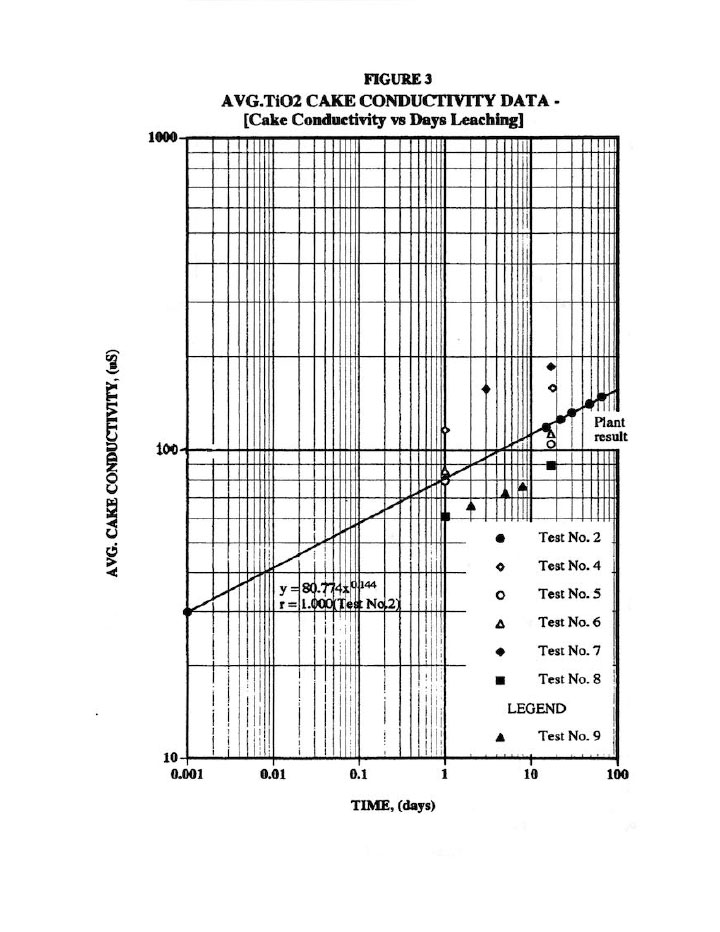
These three plots along with the cake weight, filtrate and wash properties enabled us to perform a consummate salt material remainder on each test; and thus, to determine N and to summate the amount of salt removed from the block besides as the amount left in the block.
Typical wash plots
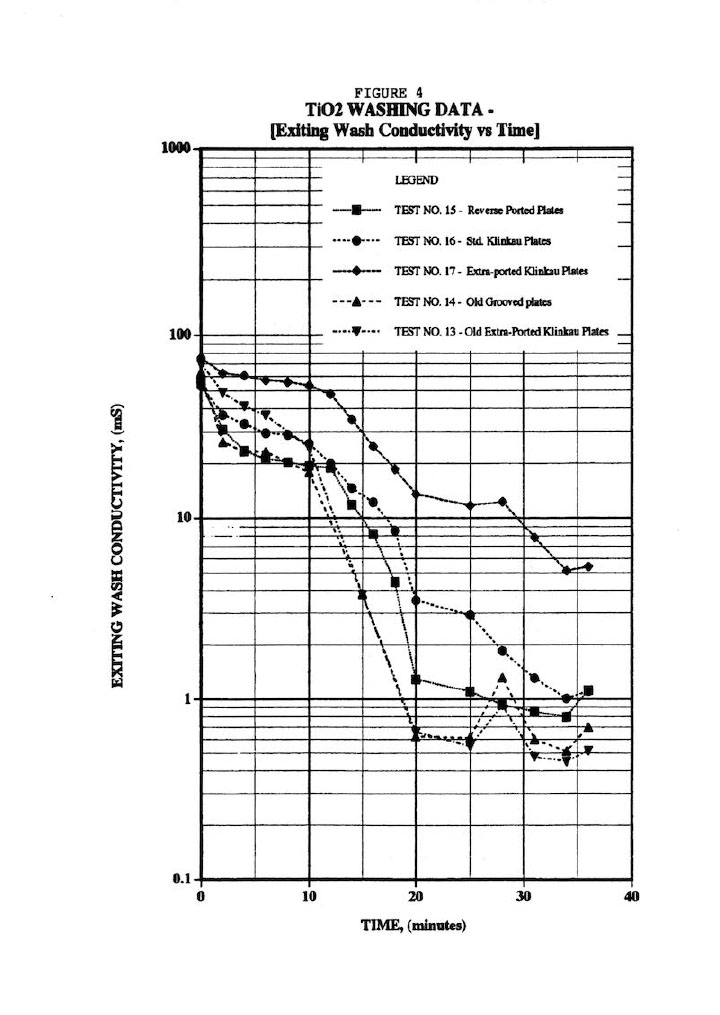
Figure 4 presents typical wash plots used past many industrialists where the outlet wash electrical conductivity is measured against wash time. This sort of plot tin be quite misleading since it doesn't account for the launder rate nor the amount of common salt remaining in the block. The plots in Figure iv do, however, suggest that extra-ported plates may improve washing; and in fact, a later on fluid-flow assay revealed significant force per unit area drop beyond the outlet launder drainage holes. As a result, the membrane plates were specified with an extra four holes to meliorate washing; and found information revealed most 10 years ago that this was the case. Similarly, the plots seem to suggest that opposite-ported washing (i.e., washing in reverse direction from the normal way) does non offer any benefits. In addition, the old-style grooved plates (as opposed to the standard pips6, 7), as well equally the former-fashion extra-ported Klinkau plates propose superior washing.
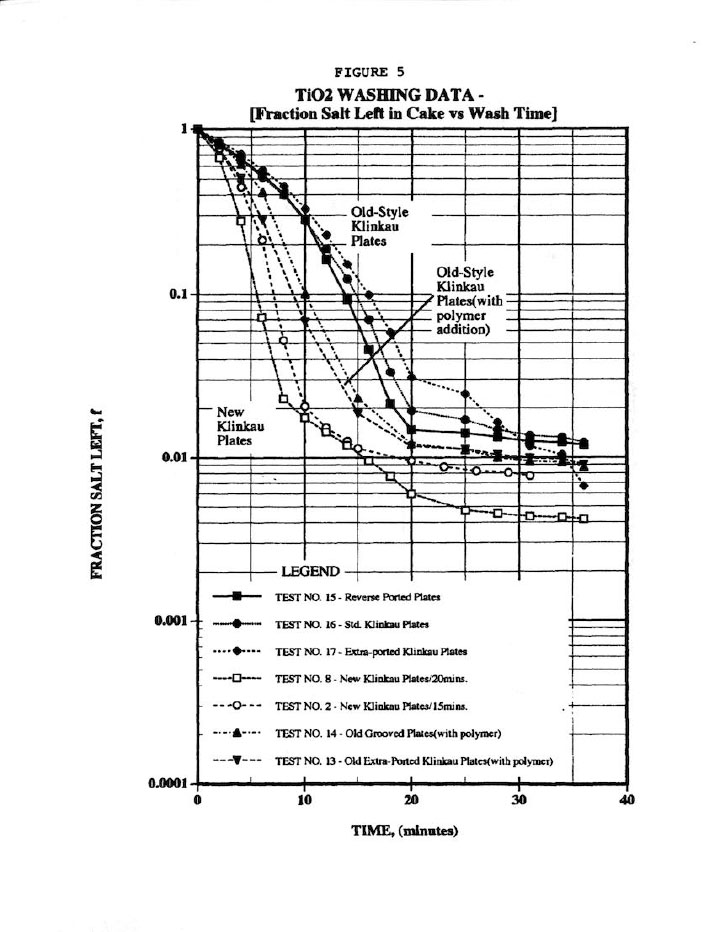
Effigy 5 compares the wash plots to the new Klinkau plates used here versus the ten-year-one-time style plates, and indicates superior washing (i.due east., similar fraction salt left in block, f, in about oneone-half the time). Again, Figure 5 is a typical wash plot used by industrialists to determine wash cycle times, but at least information technology used the more valid parameter, f. In add-on, Figure v shows that polymer addition improves washing, merely then the actress polymer toll was not warranted here due to its loftier cost.
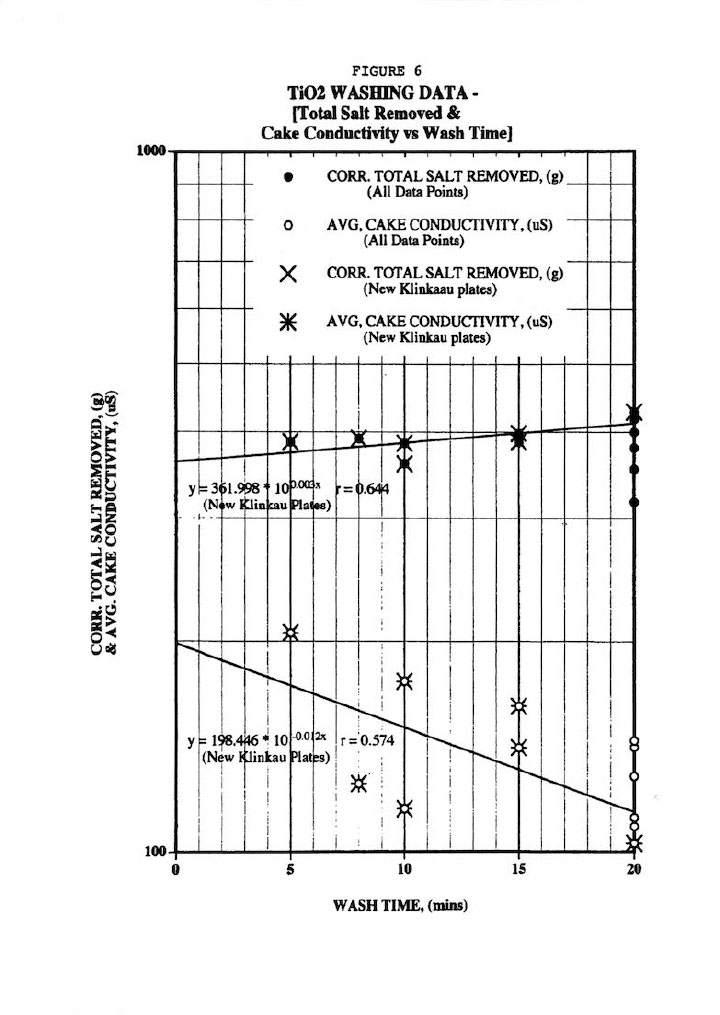
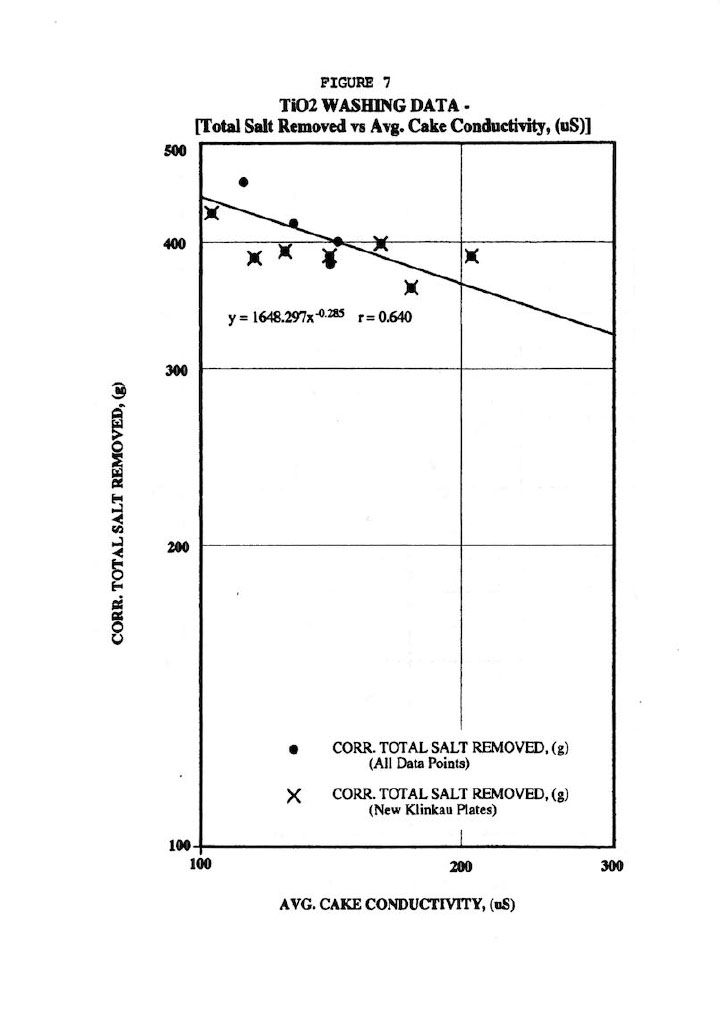
Finally, Effigy half-dozen shows fair correlations of the total salt removed (r=0.644) and residue salt in cake (equally measured by cake conductivity r=0.574) with wash time, but scatter is quite axiomatic particularly the information from the old-style Klinkau plates. Annotation that all total salt removal data was corrected for the cake amount since thicker cakes evidently incorporate more common salt than thinner ones. This also points out the fallacy of strictly using wash time every bit the contained variable. Similarly, Figure 7 shows a fair correlation (r=0.640) of total common salt removed versus remainder salt in done cake (every bit measured by the average of the 18 cake conductivity values afterwards 45 days leaching).
Actual wash plots
Effigy 8 shows a fairly good (r2 = 0.706) linear correlation of the average block conductivity (18 determinations) versus f, the fraction of common salt left in the cake equally adamant from the overall material balances beyond the membrane filter press operation, (fifty-fifty for the old-style Klinkau plates). This plot validates the assertion in Ref. 1 that an impurity mass remainder must be done around the washing process to confirm whatsoever not-ideal washing effects. It should as well be pointed out that the offset data indicate in Figure 8 (162 u.s.a. block conductivity at f=0.0056) was obtained from a dissimilar feed slurry compared to the other data points (and which showed a much larger particle size distribution). This illustrates the importance of wash experiments being conducted on the same batch of slurry; and of grade, the variability that is typically institute in any industrial procedure.
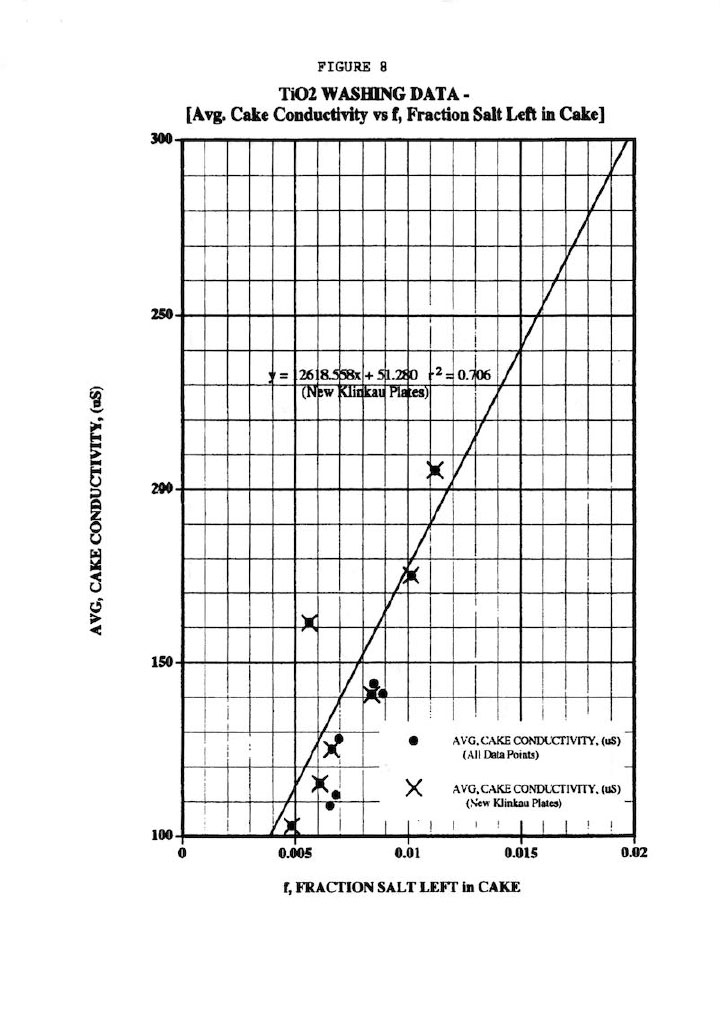
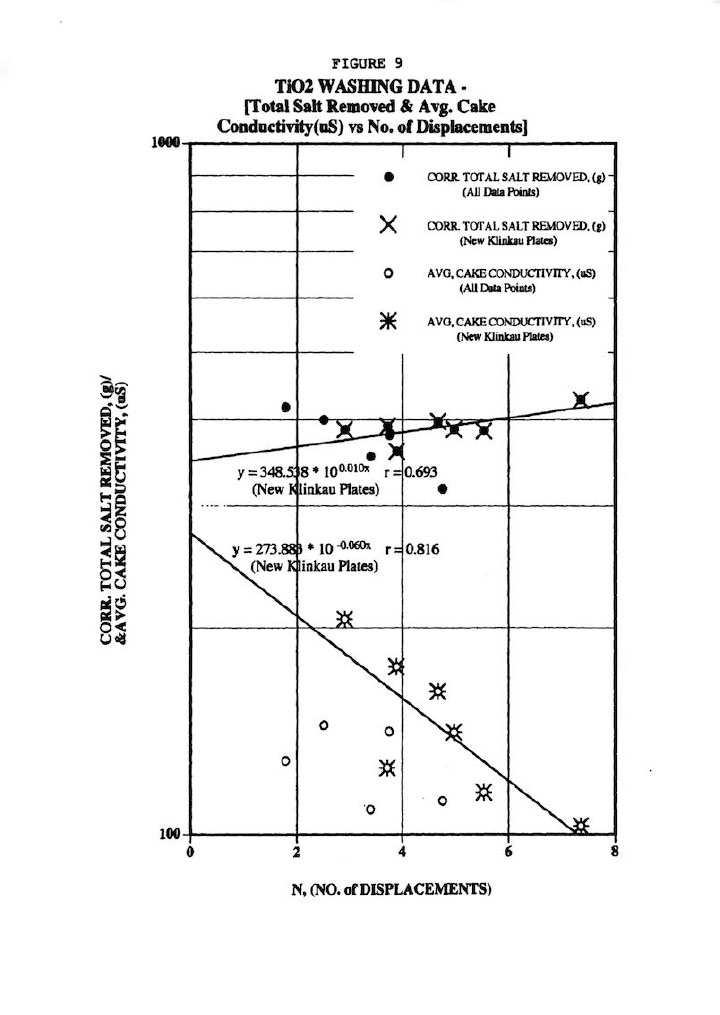
Figure nine illustrates a typical launder plot of total salt removed and average block conductivity (or residual salt in cake) versus the actual measured number of displacements, N. These correlations are quite skillful because the difficulties in obtaining accurate textile balances, particularly the full salt removed values.
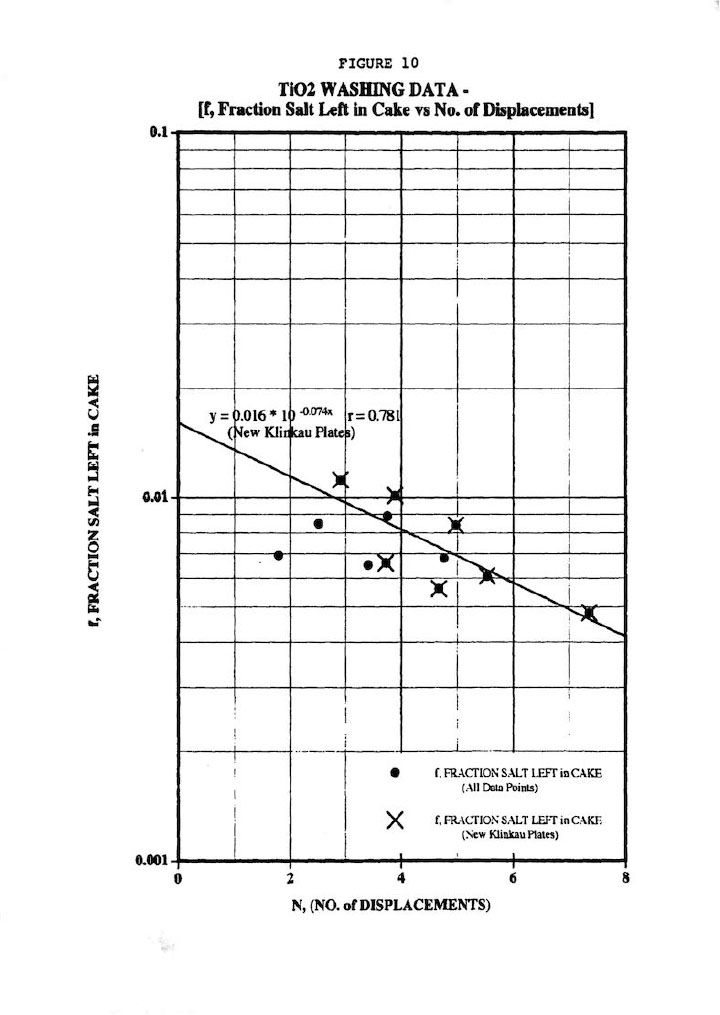
Finally, Figure 10 shows the well-nigh important wash plot of f (fraction salt left in cake) versus North (No. of displacements, or Wash Ratio), which is of prime importance for paint cake washing. Effigy 10 demonstrates a good (r=0.781) correlation of all the data regardless of plate type, but certainly a better correlation for the new Klinkau plates. This plot also indicates that the new Klinkau plates produce superior washing results particularly at larger N values, or conversely issue in higher Northward at equivalent wash times (i.eastward., refer to Effigy 5). In other words, the new Klinkau plates result in faster launder times, which direct translate into increased production.
Parting thoughts
The cake washing information presented hither illustrate the value of actual launder plots per Ref. i, equally well as the importance of accurate impurity mass balances on the washing process to appraise not-ideal furnishings and block non-uniformities. Only in this way can differences in launder parameters be adamant and compared.
The data hither besides demonstrate the improved washing performance of the new-manner Klinkau membrane plates, as well as the general washing effectiveness of the membrane recessed chamber filter presses [excellent impurity removal recessed chamber filter presses (i.e., splendid impurity removal at reasonably modest N values and excellent cake uniformity)].
Acknowledgment
The author wishes to acknowledge the splendid aid of Wallace Leung, Ph.D., Hong Kong Polytechnic University and Jay Lozier of Baker-Process, Inc. (now part of Arus-Andritz) for their invaluable aid with this projection.
References
1.Wakeman, R.J., and Tarleton, E.South., "Filtration," 1st edition, Elsevier Scientific discipline, Ltd., Oxford OX5 1GB, Britain, (1999).
2. Slottee, S., Paper presented at 9th Annual Technical Conf. & Expo, Valley Forge, PA, April 21-24, 1996: "Block Washing in Filtration Operations for Increasing Production Purity and/or Recovery of Soluble Values: Testing, Design, Trouble-shooting and Optimization of Commercial Applications."
3. Collins, R., and Pickering, T., Paper presented at 10th Annual Technical Conf. & Expo, Minneapolis, MN, April 29-May 2, 1997: "Comparative Performance of Centrifugal and Pressure level Filtration."
four. Tichy, J.W., and Steidl, A.D., Paper presented at 11th Annual Technical Conf. & Expo, St Louis, MO, May iv-7, 1998: "Dewatering, Washing, and Drying of Filter Cake with Steam on BHS-Filters."
5. Paavola, N., and Oja, One thousand., Paper presented at twelfth Almanac Technical Conf. & Expo, Boston, MA, April six-9, 1999: "Washing and Dewatering of Dissimilar Starches in Pressure Filters."
six. Mayer, E., Fluid/Particle Separation J., (4), 182-185 (1990).
7. Mayer. E., Fluid/Particle Separation J,. 6 (i). 4-9 (1993).
8. Mayer, Due east., and Wood, J.1000., Fluid/Particle Separation J. 9 (3), 218-227 (1996).
9. Heuser, J., and Stahl, W., Newspaper presented at 11th Annual Technical Conf. & Expo, St. Louis, MO, May 4-7, 1998: "The Influence of Non-Platonic Effects on Block Washing and Their Experimental Analysis."
Source: https://www.filtnews.com/cake-washing-in-a-membrane-filter-press/
Posted by: humphreyuporly.blogspot.com
0 Response to "How To Wash Filter Cake"
Post a Comment